
Why Fast Responses Only Work When Backed by Experience
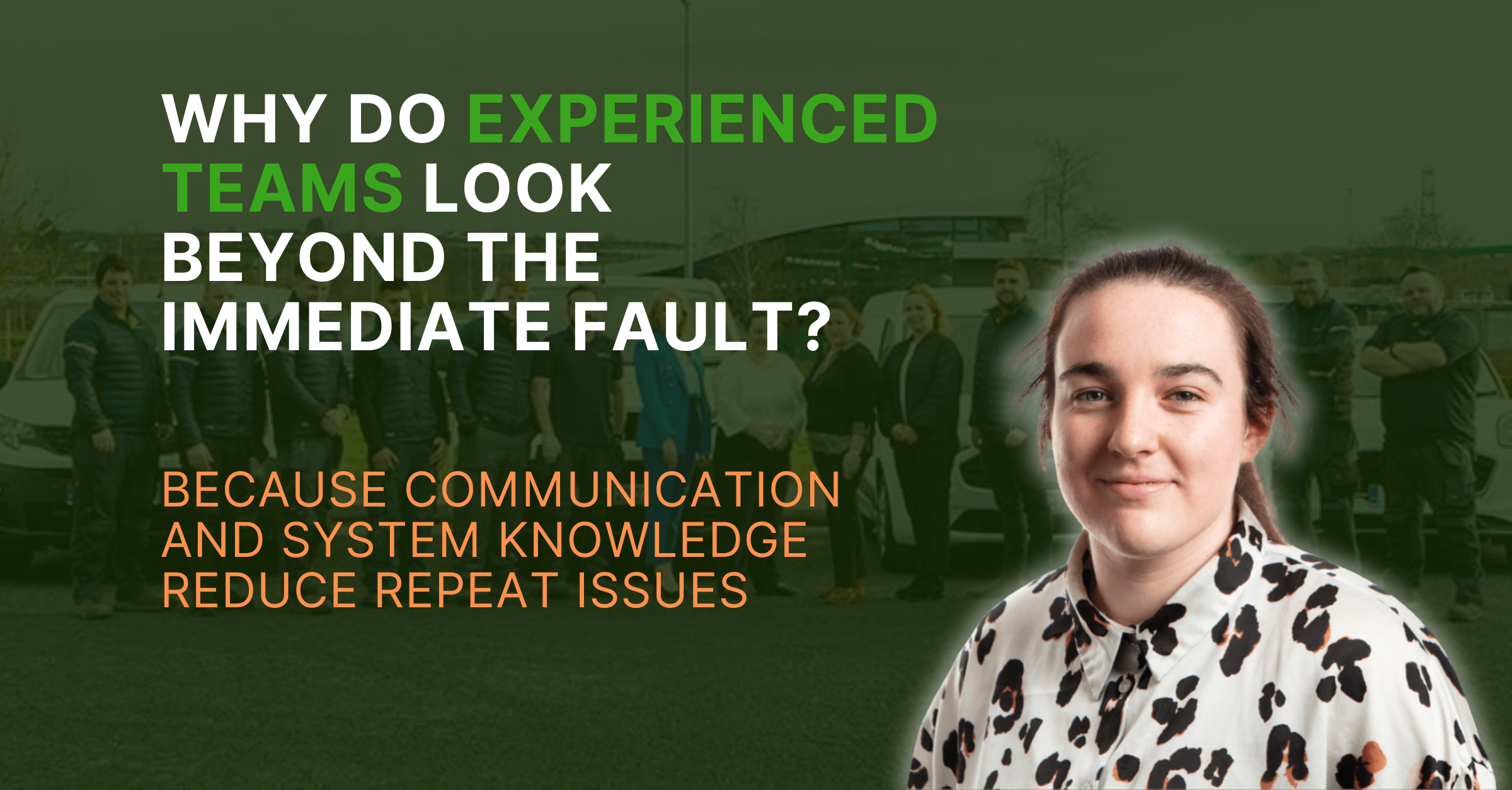
“When something goes wrong in a building, speed matters. But if you don’t understand the system behind the issue, it will come back.” - Seaneen Flynn, Service Desk Manager
When a landlord reports a serious issue in a building, the fault itself is urgent and non-negotiable. If heating goes down in a large apartment block, restoring service is the priority. But what determines how quickly that happens, and whether it stays fixed, is everything that follows the initial report: how the issue is understood, how clearly it’s communicated, and whether the response looks beyond the immediate symptom to the wider system behind it.
Buildings are complex. Systems are interconnected. A problem that shows up in one apartment can originate somewhere entirely different. Treating facilities management as a series of isolated call-outs often solves the symptom but leaves the cause untouched.
This is where the difference between reactive maintenance and experienced facilities management becomes clear.
Communication is not an add-on. It is the service.
One of the strongest themes to come through in discussions with the service desk team is that communication is not something layered on top of the job. It is central to how problems are managed.
That communication runs in two directions.
Externally, landlords and building owners need clear, timely updates. Not technical detail for the sake of it, but straightforward answers:
- Has someone attended?
- Is it resolved?
- If not, why not?
- What happens next?
Internally, engineers, managers and the service desk need to be aligned before anyone arrives on site. Tickets need to be clear. Access arrangements confirmed. Site details understood. The right engineer needs to attend with the right information.
That level of coordination only works when the groundwork has been done properly.
During mobilisation, Denise Heneghan’s focus is on clarity rather than speed: understanding how the building operates, how information should flow and what the property manager actually needs day to day. When that structure is in place from the start, the service desk and engineering teams can operate with confidence, and issues are resolved without pulling landlords back into the detail.
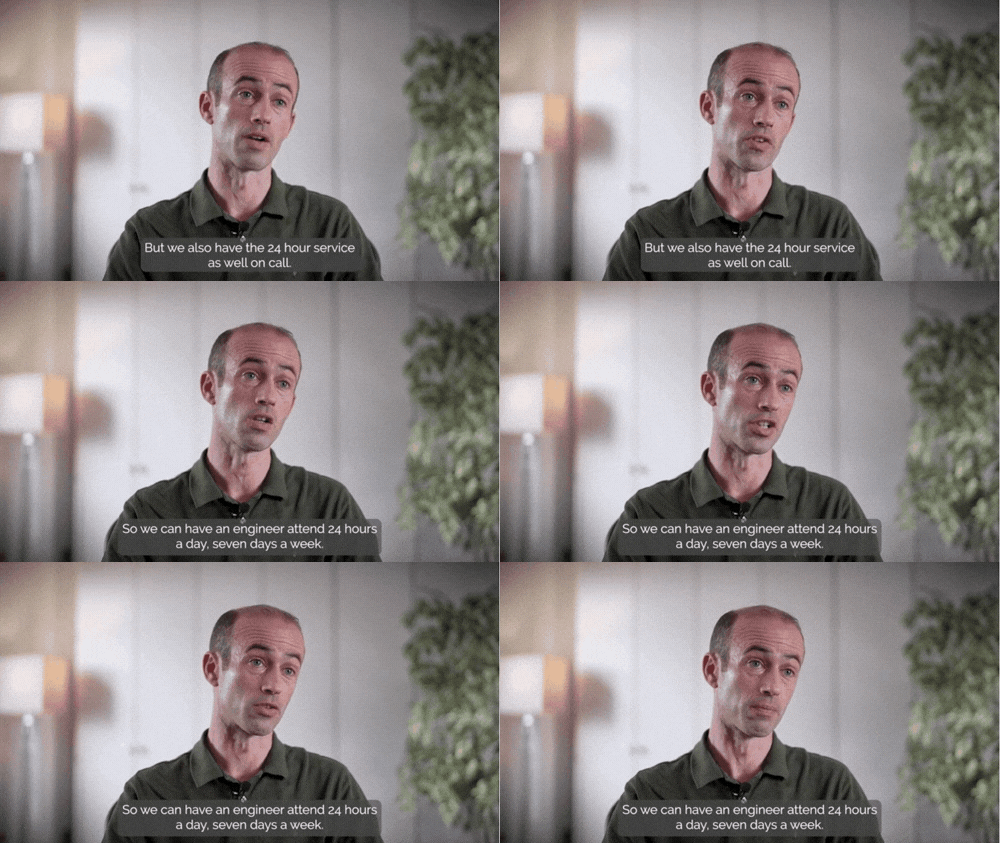
As Service Desk Manager Seaneen Flynn explains, much of the work happens before an engineer ever reaches the building.
“A big part of our job is making sure the engineer arrives ready to work. That means understanding the issue properly, confirming access, and making sure nothing is missed that would delay the job.”
When communication breaks down at any point, landlords feel it immediately. They end up filling the gaps, chasing updates or managing expectations on site. When communication works, the issue feels contained.
Experience changes how problems are diagnosed
Another clear distinction that emerged from the call is the role of experience in how issues are handled on site.
Sending a tradesperson to fix a reported fault is the easy part. Knowing what else to look for, what might be connected, and what could fail next requires familiarity with systems and with the building itself.
Seaneen was clear that when engineers attend a site, the job is not treated as a single task to be closed as quickly as possible.
“We don’t just fix the problem and leave. If something has failed, there’s usually a reason. Our engineers are always looking at what else might be connected to it.”
That approach is analytical rather than transactional. It involves stepping back from the immediate issue and assessing the wider system. In buildings with district heating, shared plant rooms and multiple services, this matters.
Fixing one visible fault without understanding the underlying cause often leads to repeat call-outs, frustrated residents and landlords who feel like they are constantly dealing with the same problems in different forms.
Buildings need continuity, not one-off fixes
A recurring point in the discussion was the value of continuity.
Buildings are not static. They behave differently over time, across seasons, and as usage patterns change. Teams that work consistently within the same buildings start to recognise those patterns.
They know which issues tend to appear together. They know where access is usually delayed. They know which systems are sensitive and which can tolerate short-term disruption.
That understanding only develops through repeated exposure and internal communication.
“The more time you spend working in a building, the better you get at diagnosing issues properly,” Seaneen explains. “You start to recognise what’s normal for that site and what isn’t.”
This accumulated knowledge feeds back into how future issues are handled. Engineers arrive better prepared. The service desk can anticipate questions before they are asked. Updates to landlords become clearer and more confident.
Over time, that continuity reduces disruption rather than just responding to it.
A holistic approach reduces long-term stress
One of the clearest contrasts drawn in the call was between a holistic facilities management approach and relying on ad hoc contractors.
When multiple contractors are involved, responsibility is fragmented. Each party fixes their part and moves on. No one is accountable for how those fixes interact, or whether they introduce new risks elsewhere.
A more holistic approach looks at the building as a whole. Mechanical, electrical and HVAC systems are not treated in isolation. Information is shared internally. Observations from site feed into planned maintenance. Patterns are spotted early.
This is not about doing more work. It is about doing the right work at the right time.
For landlords, the practical effect is fewer repeat issues, clearer communication, and far less time spent managing problems that should already be in hand.
What good facilities management looks like in practice
From the outside, effective facilities management can look deceptively quiet. Issues are reported. Updates are provided. Problems are resolved. Life goes on.
That calm is the result of experience, internal communication and a deliberate effort to understand buildings over time rather than treating each issue in isolation.
As Seaneen puts it:
“Landlords don’t need to know every technical detail. They just need to trust that the issue is being looked at properly and that they’ll be kept informed.”
In complex buildings, that trust is built slowly, through consistent delivery and clear communication. But once it is established, it changes the relationship entirely.
The landlord logs the issue, receives the update, and gets on with their day.
And that, ultimately, is what good facilities management is meant to do.





.png)
.png)


